
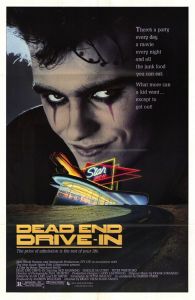
 Mesopotamia may be the cradle of civilization, but Australia is the birthplace of the apocalypse. Ever since George Miller unleashed “The Road Warrior” on an unsuspecting public in 1981, its feral, stripped-down version of post-Armageddon life has been the go-to setting when movies take place at the end of the world. “Post-apocalyptic” has become synonymous with rusting DIY war machines and dusty leather bondage gear, thanks to the Aussies. That’s why it’s surprising and refreshing to find a movie like “Dead End Drive-In,” another Ozploitation production that shares a lot of elements with the world of Mad Max but nevertheless has something very different to say about what it would mean to live during the end of the world. Continue reading
“Dead End Drive-In”
Reply
 I should be the ideal audience for “
 The original “
 “
“ If you’ve ever experienced a panic attack while watching Sheri Lewis and Lambchop, or if “Sifl & Olly” make you break out in a cold sweat, or if you’ve ever had recurring nightmares about Kermit the Frog, you may want to stay away from “Uninvited.” Likewise, if cat videos on the Internet make you tense, or if Garfield makes you edgy, or if you can’t stop screaming whenever you see a can of Fancy Feast, you are strongly advised to avoid “Uninvited.” This is because the monster in this direct-to-video monster movie is represented half the time by a perfectly ordinary housecat and the other half by a mangy hand puppet. Those of us who aren’t terrified by such things, however, still have plenty of reasons to avoid it.
 Perhaps the biggest problem with “Project: Metalbeast” is that there is no earthly way any movie could live up to that title. If the filmmakers could have titled the movie with an airbrushed Boris Vallejo painting of a metallic werewolf, I feel like they would have. The title is a screaming electric guitar solo with full pyrotechnic accompaniment, and it ranks among the all-time-great, one-of-a-kind B-movie titles like “Hell Comes to Frogtown” or “Surf Nazis Must Die.” If the majority of movie titles serve as a polite introduction to the audience, “Project: Metalbeast” is a high-five from a complete stranger doing a backflip on an ATV over your head.
  These days, the two most important words in Hollywood are “cinematic universe.” Inspired by the billions of dollars Marvel has made with its Avengers movies, studios have been frantic to jumpstart their own cinematic pyramid schemes with intellectual properties from the Justice League of America to the Universal Monsters to Nickelodeon cartoons. The idea, of course, is to maximize profit by giving audiences movies that spin off characters into their own movies or movies that collect characters from other franchises into massive team-up spectacles. It worked well back in the day when Frankenstein met the Wolf Man and most recently when Captain America fought Iron Man, but it remains to be seen whether or not audiences will sit through “Friar Tuck: Origins” before they see Robin Hood finally get the Merry Men together in the last five minutes of his movie.
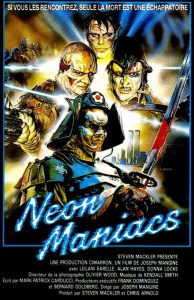 Horror fans have a unique relationship with the genre. Perhaps no other type of movie has inspired so many to think, “I could do this!” than horror, and because of that horror fans have a symbiotic connection to it. From Sam Raimi and Tom Savini on one end of the spectrum to Mark Borchardt and Mike Schank from “American Movie” on the other, a significant portion of filmmakers who specialize in horror started as fans mixing fake blood in their mothers’ kitchens and shooting yards of Super 8 film. And in many cases, horror returns the favor by making horror fans into heroes. Tommy Jarvis’ effects makeup skills defeat Jason in “Friday the 13th Part IV,” the Frog Brothers’ horror fandom help them identify what’s up with the Lost Boys, and the Monster Squad graduates directly from doodling werewolves to kicking them square in the nards.
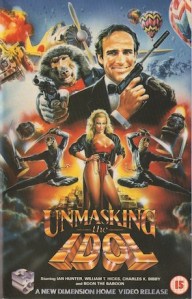 “Unmasking the Idol” isn’t just an action movie, it’s an action-figure movie. For all its attempts to crib its formula from the James Bond series, playboy-ninja-secret agent Duncan Jax, his friends, and his enemies all feel like they were plucked off the shelves at Toys R Us, complete with hot-air balloon accessories and secret throne room playset. It’s a movie pitched at the level of a Saturday-morning cartoon and proudly wears its stupidity on its sleeve. If kung-fu baboons, piranha pits, and submarine explosions sound like a good time to you, “Unmasking the Idol” is where you need to be.
 Cyborg City 3000