
 I didn’t realize “Eat and Run” had made any kind of impression on me at all until I saw the picture of its main monster on the VHS box recently. Years ago, when I was a kid and a voracious reader of movie reviews in the newspaper, certain movies just stuck with me because the critics’ plot descriptions made them memorable. That’s why it would be years before I ever worked up the courage to watch “Nightmare on Elm Street 2: Freddy’s Revenge,” thanks to Gene Siskel’s description of Freddy tearing his way out of the main character’s chest.
The review for “Eat and Run” came complete with a picture of Murray, the movie’s alien maneater. Murray was fatter than any human being I had ever seen in my life up to that point, so much so that I assumed he was some kind of Jim Henson puppet, and his bald head and shark-like mouth made me imagine a movie in which this mountain of flesh and teeth would be tearing people into bloody ribbons. It terrified me for days. So when I found the movie this week, the plot sounded familiar, but the sight of that creature on the box made it official. I had to see this movie at last. Continue reading
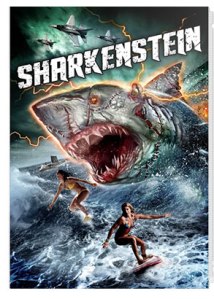 The art of movie making essentially is a sleight of hand trick. The filmmaker’s craft is convincing the audience that what they’re seeing is real, in a limited sense. What works in filmmakers’ favor is that they only have to make what’s directly in front of the camera seem real. The movie screen creates a very thin slice of reality that only exists as light and sound. By carefully selecting the evidence and manipulating it in front of the camera, a filmmaker can make an audience believe in something, even if that belief is fleeting. For example, Steven Spielberg knew the robotic shark built for “Jaws” wouldn’t be as convincing to an audience as he had hoped. But, by carefully choosing how much of that shark to show and when, coupled with John Williams’ music, Spielberg made an entire generation scared to even dip their toes into a swimming pool.
 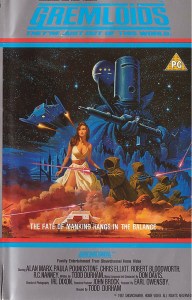 “Star Wars” is about as big of a pop cultural phenomenon as you can get, but there are still some areas where its influence is practically non-existent. For example, even though the major characters of “Star Wars” are global icons with name recognition in even the farthest corners of the world, none of them have ever received enough votes to stand on the dais with the leading candidates for British Prime Minister. However, Lord Buckethead, main villain of the 1984 “Star Wars” spoof “
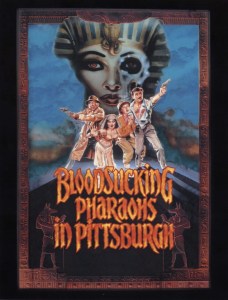 We’re living in a time of uninspired movie titles. Part of that is because the major studios are so fixated on building franchises that they approach movie titles the same way McDonald’s approaches naming menu items. (“Jalapeno McChicken” vs. “Marvel’s Ant-Man,” for example.) Part of it is because streaming services’ recommendation algorithms do a lot of the studios’ marketing work these days. Part of it might also be because there’s just less creativity at work in the movies these days, although I hope that’s not the case. In any event, they don’t make movie titles or movies like “
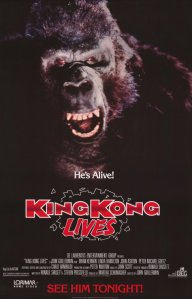 The moment a movie’s title appears on-screen is always a huge opportunity to set the tone for the audience. So what does it say about “
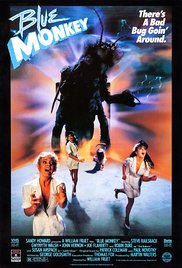 I have to assume that the people who made “
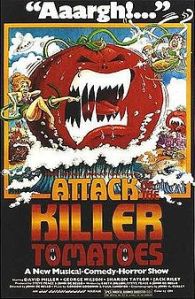 “
“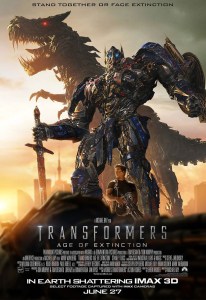 At the end of an especially long and acrimonious election season, it’s totally natural to want to just escape into some mindless entertainment. After more than a year of doom-saying and apocalyptic imagery pummeling you into submission, there’s nothing wrong with wanting some spectacle, some whiz-bang action and some light-hearted adventure to remind you that not everything is about hate and resentment. That’s what big blockbuster summer sequels are made for, after all. Well, most of them are. Unfortunately, there also exist movies like “
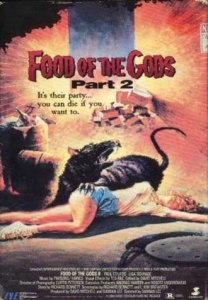 You really have to hand it to “
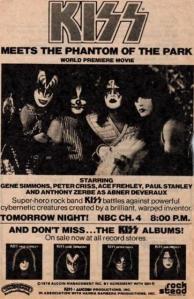 I don’t mean it as an insult when I say that KISS is the ultimate triumph of style over substance. Musically, there isn’t much to distinguish them from Van Halen, Aerosmith, Boston, or any other arena-rock staple of the late 70s, but none of those other bands have had their own action figures or lunchboxes or credit cards. KISS combined the blunt, dick-swinging machismo of their music with a fire-breathing stage show and a look straight out of a Halloween party, creating something 13-year-old boys of any age could love. Their style elevated them from a rock band into comic-book characters. In other words, it’s hard to imagine another band that could have inspired the 1978 TV movie “
 Cyborg City 3000